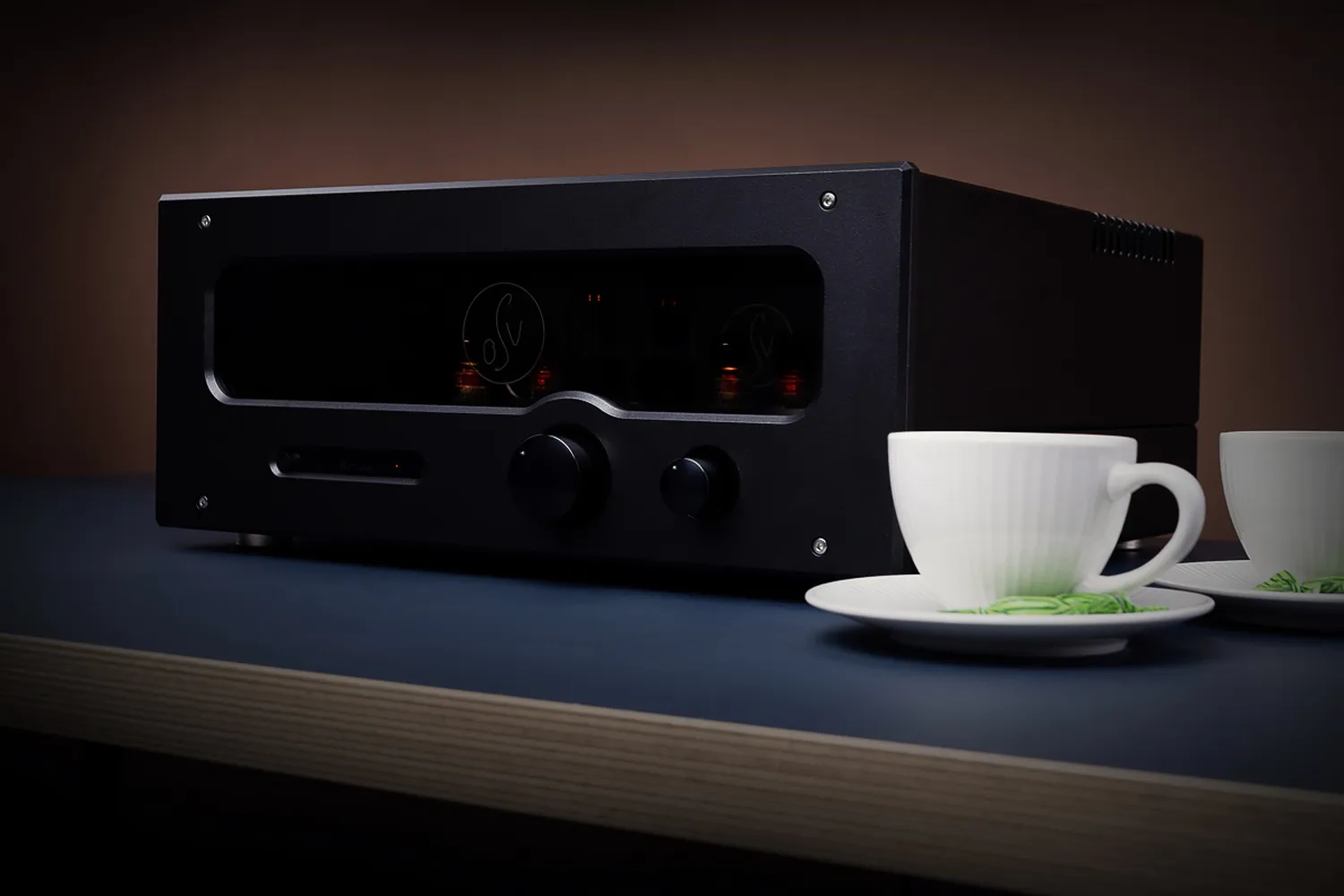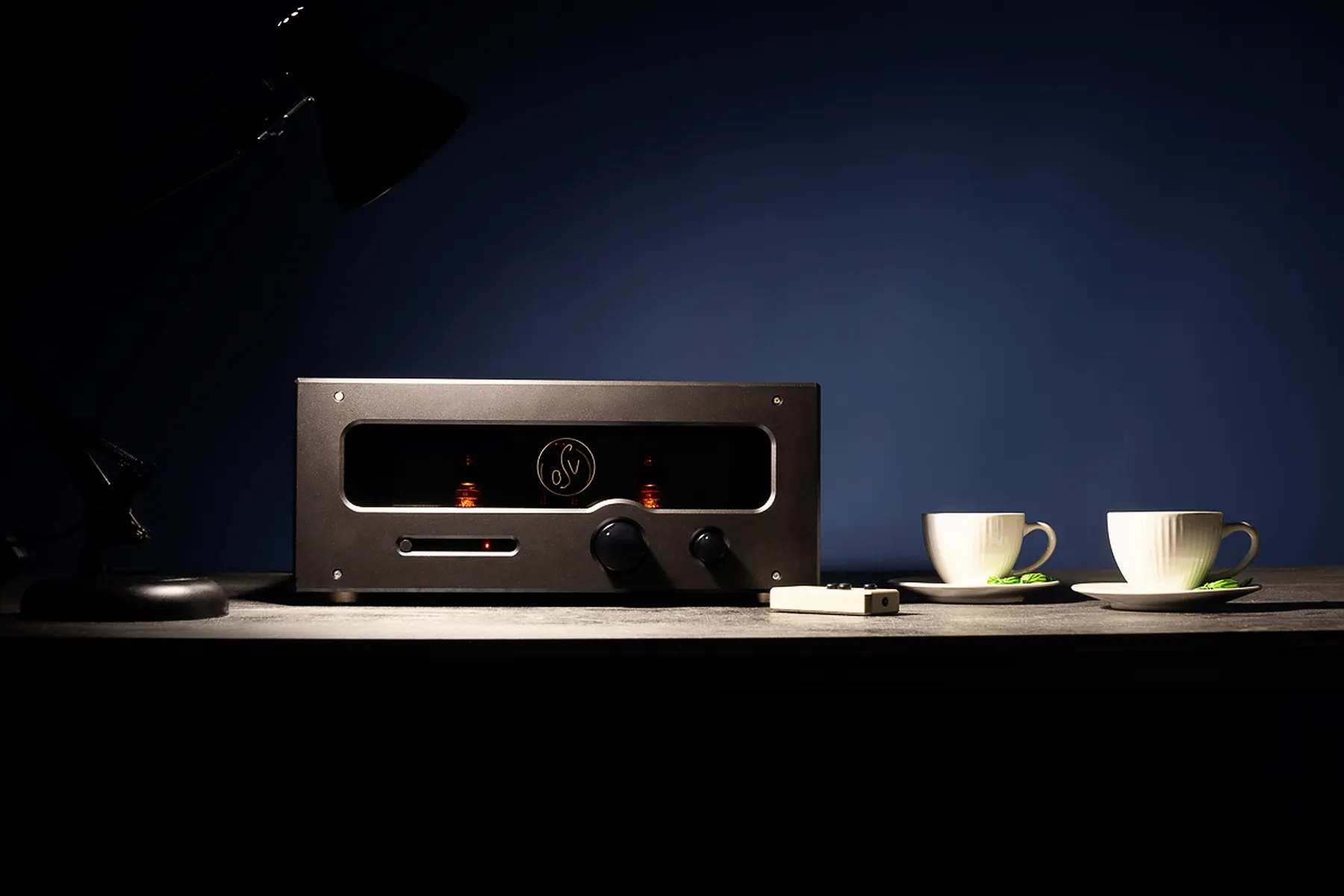
Engineered without compromise
The technology.
A hybrid amplifier only works if both halves are taken seriously. Tubes give tone, texture and a sense of ease. Solid state gives current, grip and silence. Put a careless version of either next to the other and you hear the join.
These pages describe what is actually inside the HT-50 and the HT-120, figure by figure.
-
 Tube stage Class A, custom SRPP
 -
 Output stage Bipolar, class AB
 -
 Dual monoblock HT-120, two transformers
 -
 Jantzen Z-Cap Coupling capacitors
 -
 Hand wired Critical signal paths
 -
 DC blocker On the mains, standard
The signal path
Hybrid, properly done.
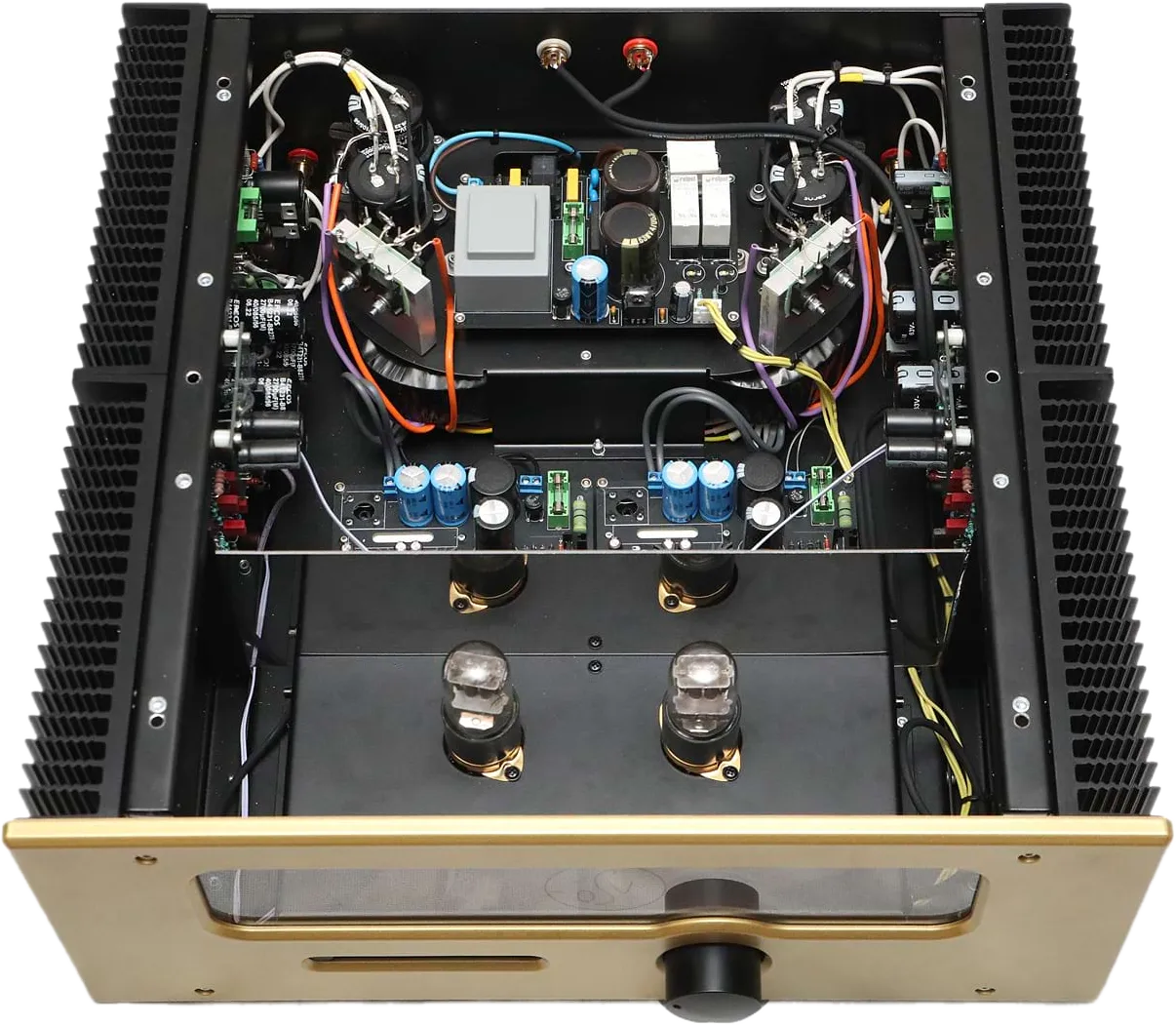
The input stage is a custom designed SRPP circuit running in class A. SRPP is a cascode arrangement that loads the tube with another tube rather than a resistor, which keeps distortion low and the output impedance down without adding feedback.
From there the signal passes through Jantzen Audio Superior Z-Cap coupling capacitors into a bipolar output stage in class AB. Nothing else sits in the way.
- Class A, always The tube stage never leaves class A, at any volume.
- No unnecessary stages One gain stage, one output stage, and the coupling between them.
- Hand wired where it counts Critical signal paths are wired point to point by hand.
Where the sound really comes from
The power supply.
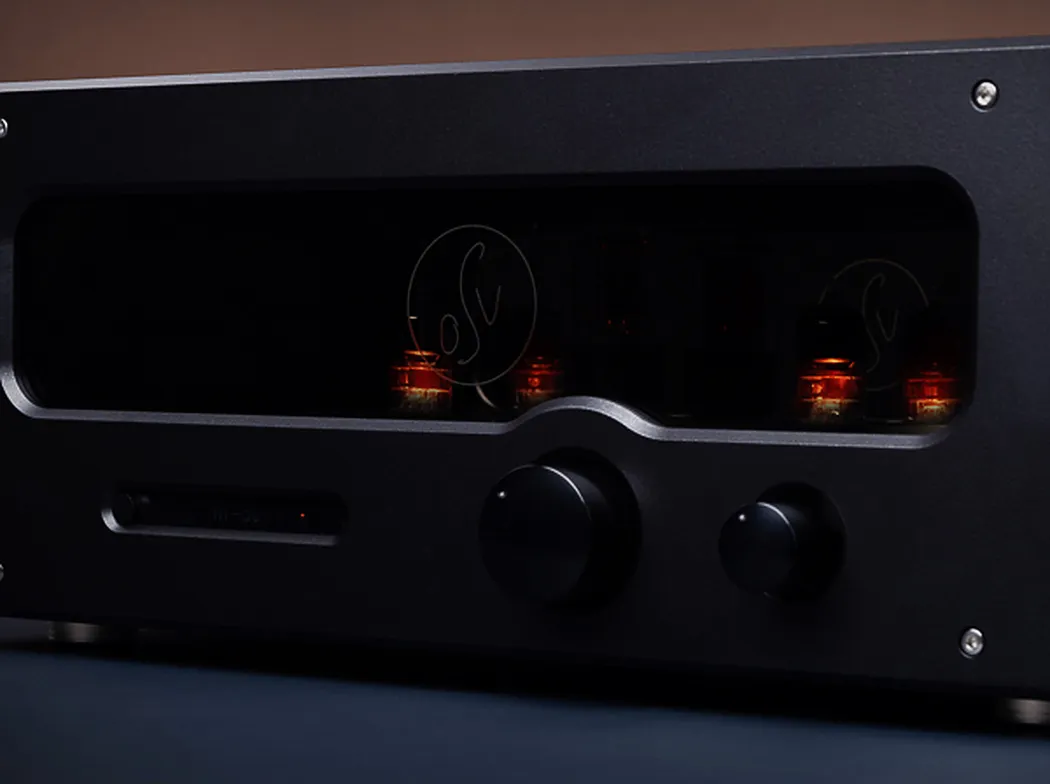
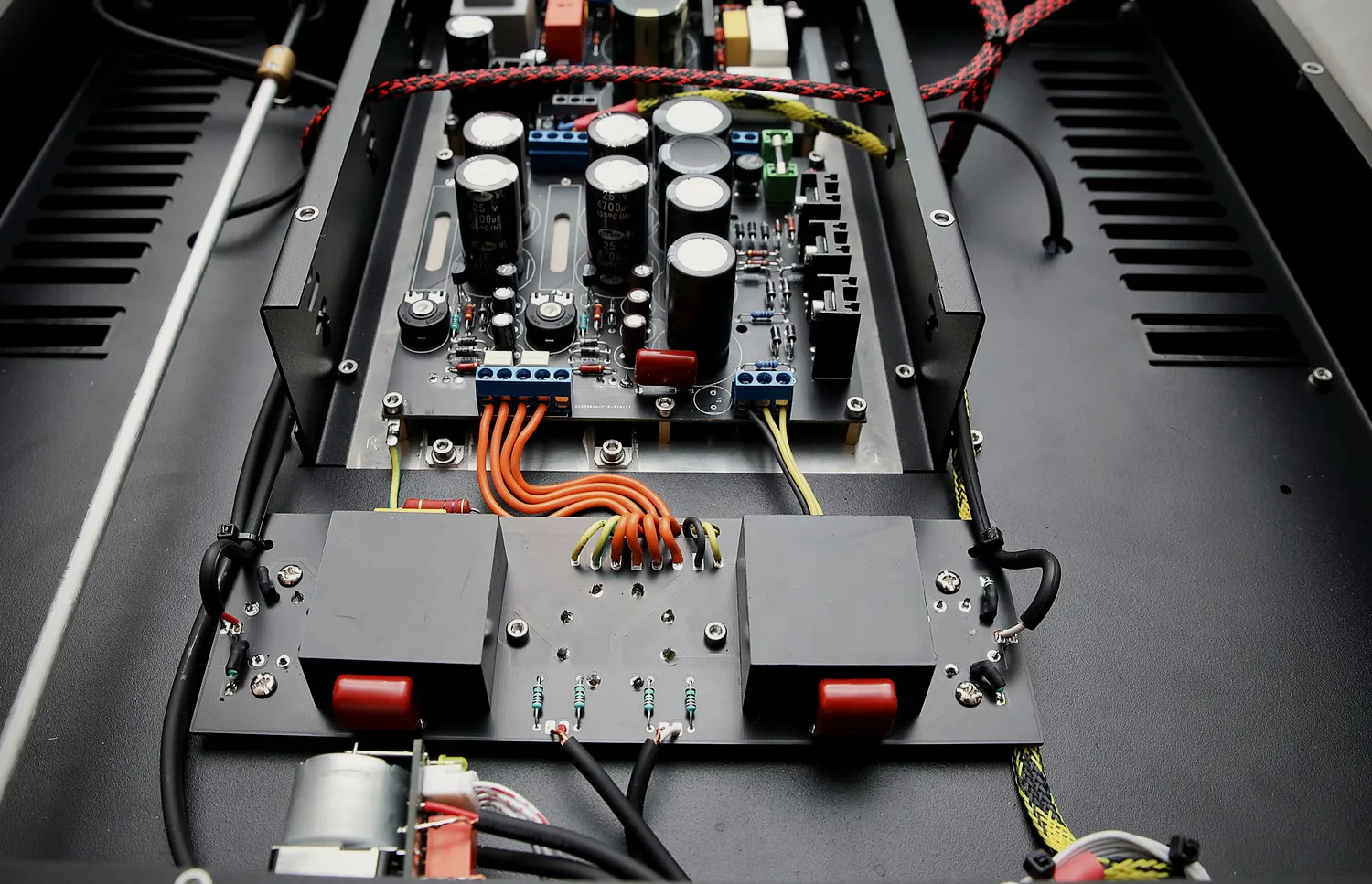
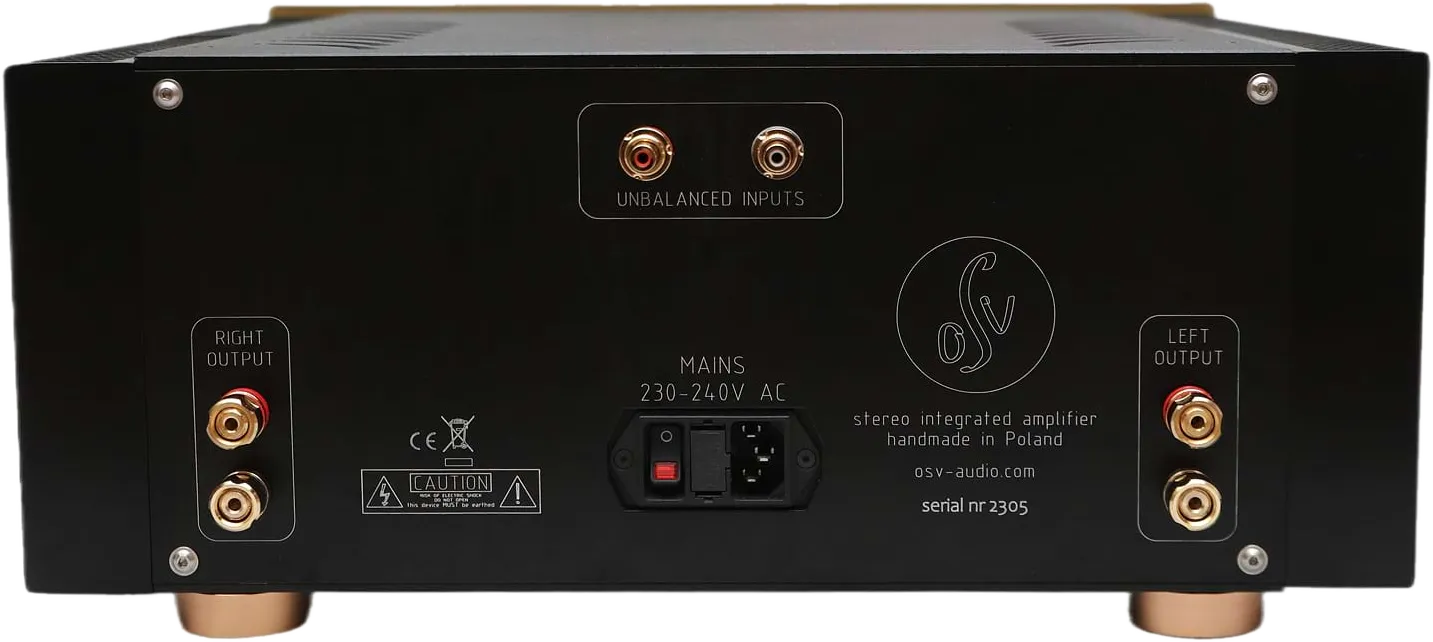
An amplifier can only be as quiet and as composed as its power supply. The HT-120 is a dual monoblock: two separate 300 W toroidal audio transformers, each feeding its own channel, with the preamp supplies stabilised and separated from the power stage.
- Two toroidal transformers The HT-120 gives each channel its own 300 W transformer, so one can never rob the other.
- Separated supplies Stabilised heating and anodic voltage for each preamp, and a separate supply for the power stage.
- EMI mains filtering Mutual modules handle mains filtering, DC blocking and digital management.
- Power factor 600 VA on the HT-120.
What goes in
Components, without concessions.
By selecting components of the highest calibre without making any concessions, we made amplifiers that create a superior listening experience for the user every time.
- Coupling capacitors Jantzen Audio Superior Z-Cap, in both models.
- Tubes Two 6SL7 in the HT-120. One JJ 6SL7 and two NOS 6J9P-E in the HT-50.
- Output devices Bipolar transistors in class AB, chosen for current delivery.
- Inputs Unbalanced RCA line, with Bluetooth available as an option.
How it is put together
Built one at a time.
Every chassis is assembled, wired and listened to in Poland before it is allowed to leave. We build in small batches, which is slower and which is the point.
Experience OSV Audio
Hear what it adds up to
None of this matters unless it does something for the music. Book a session and judge it the only way that counts.